

An underwear fabric label tells you three things: what the fibres are, how much of each is in the blend, and how to wash the garment. Read the first fibre for how the pair will feel, the stretch percentage for how it will fit, and the care symbols for how long it will last.
Where to find the label and what is on it
Most modern underwear is tagless, so the information is often printed straight onto the inside of the waistband or the back panel instead of sewn on as a scratchy tag. Wherever it sits, it usually carries the same details:
- Fibre content, listed from the largest share to the smallest, for example "95% Cotton, 5% Spandex".
- Size, usually S to XXL (sometimes written 2XL).
- Care symbols for washing, bleaching, drying and ironing.
- Sometimes the country of origin and a batch or style code, which matter if you ever want to reorder exactly the same pair.
The order of the fibres is the quickest clue. The first one shapes the feel against your skin; everything after it is there to tweak stretch, shape or durability.
The main fibres, decoded
A handful of names cover almost every pair in a men's underwear drawer. Several of them have more than one name depending on where the garment was made, which is why labels can look confusing.
| On the label | Also called | What you will notice |
|---|---|---|
| Cotton | Combed cotton | Soft, matte, familiar; absorbs moisture rather than shedding it quickly |
| Modal | Sometimes sold under names like "silky" | Smooth, cool to the touch, drapes closely |
| Polyamide | Nylon | Light, slick, quick to dry; the base of most mesh |
| Polyester | PES | Holds colour and prints well, dries fast; common in swimwear |
| Spandex | Elastane | The stretch; never used alone, always a smaller share of the blend |
So "80% Polyamide, 20% Elastane" and "80% Nylon, 20% Spandex" describe the same kind of fabric. Don't let the different wording make you think one is a new material.


What the stretch percentage tells you about fit
The spandex or elastane number is the one most shoppers skip, and it says a lot about how a pair will sit. Here is how it plays out across real pairs in our range:
- Around 5%: our cotton boxer briefs are 95% cotton and 5% spandex. Enough give to move with you, with the relaxed hand of cotton.
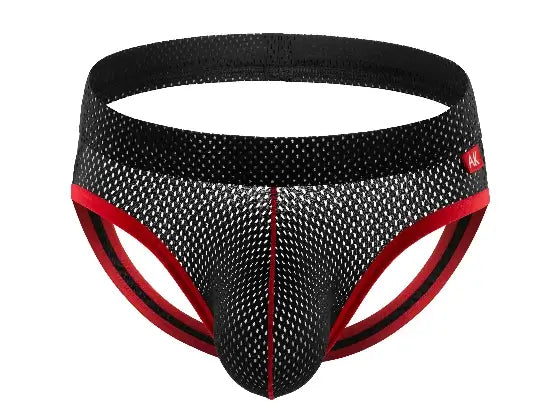
- 10 to 13%: the printed swim briefs (90% polyester, 10% spandex) and the dotted mesh jockstrap (87% polyamide, 13% spandex) hug more closely and spring back after every movement.
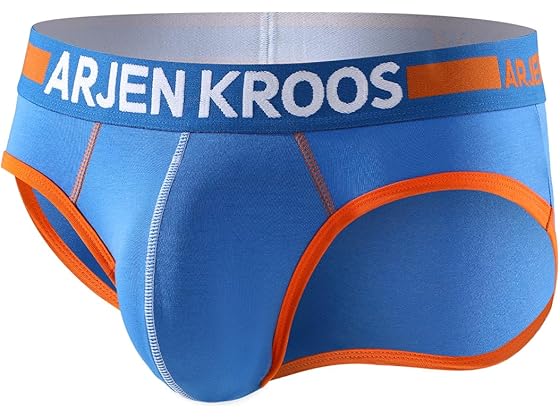
- Around 20%: the low rise mesh panel briefs are 80% polyamide and 20% elastane, a body-skimming, second-skin fit.
As a rule of thumb, more stretch means a snugger, smoother fit that stays in place, while less stretch feels looser and more like a classic natural-fibre pair. If you are between sizes, a high-stretch blend usually forgives sizing down; a low-stretch cotton pair is safer sized up. Our guide to sizing up or down goes into that in more detail.
Marketing names vs the real fibre
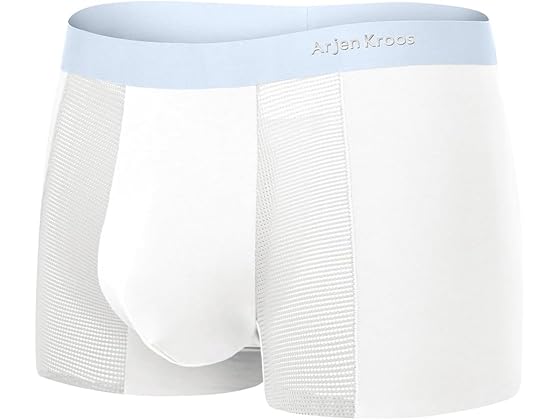
Product names describe a feel, labels describe a fibre. Words like "ice silk", "silky", "cool" or "cloud fabric" are descriptions, not materials. Our Ice Silk Trunks, for example, are made from soft modal fabric, which is what gives them that cool, smooth hand. The low rise mesh briefs also mention ice silk fabric, yet their label reads 80% polyamide and 20% elastane. Same marketing word, different fibre.
When a name and a label seem to disagree, trust the label for care and the name for the feel the maker was aiming for.


Care symbols in plain words
The cotton boxer briefs, mesh briefs, dotted jockstrap and swim briefs featured here all list machine washing in their care details. The symbols themselves follow a simple pattern:
- Tub with water: machine washable. Dots inside mean temperature (one dot is cool, two is warm). A hand in the tub means hand wash only.
- Triangle: bleach. Crossed out means no bleach, which is the case for most coloured and stretch fabrics.
- Square with a circle: tumble drying. One dot means low heat; a cross means air dry instead.
- Iron: rarely needed for underwear. Dots show the maximum heat; a cross means no ironing.
- Plain circle: professional cleaning only, which you will almost never see on underwear.
Stretch fibres are the part of any blend that dislikes heat most, so a cool wash and air drying help the waistband and leg openings keep their snap. Our full washing guide covers the rest.
Choosing by label for different days
Once you can read the label, you can pick a pair for the job rather than by looks alone:
- Relaxed everyday wear: a cotton-led blend with a little stretch.
- Warm days and active hours: a polyamide mesh blend, which is lightweight and quick-drying.
- A smooth line under fitted clothes: modal or a high-stretch polyamide blend.
- Beach and pool: polyester with spandex, which keeps prints bright and dries quickly between swims.
For a side-by-side look at how these fabrics compare in daily wear, see mesh vs cotton vs modal.
Shop this guide

Frequently asked questions
Is elastane the same as spandex?
Yes. Elastane is the common name in Europe and spandex is the common name in the US. Both describe the same stretch fibre.
Is polyamide the same as nylon?
Yes. Nylon is a type of polyamide, and the two names are used interchangeably on clothing labels.
Why is there no fabric tag inside my underwear?
Many pairs are tagless to avoid a tag rubbing your skin. The fibre content and care details are usually printed on the waistband or the inside back panel instead.
Does more spandex mean better quality?
Not necessarily. It means more stretch and a closer fit. Around 5% suits a relaxed cotton pair, while 10 to 20% suits mesh, swimwear and second-skin cuts.
Find your fabric
Now that the label makes sense, browse by fibre: soft cotton underwear, airy mesh underwear, smooth silky underwear and quick-drying men's swimwear. Every order ships in discreet packaging.

